Executive travel is crucial for business operations. At drvn, we provide technology-driven solutions that optimize travel logistics and elevate the experience, ensuring efficiency via our sophisticated platform.

effortless executive travel
Corporate Transport Solutions
drvn offers customized solutions for executive transportation through an advanced platform that integrates user-friendly booking and cutting-edge logistics, connecting clients with top-tier, licensed transportation partners. Whether managing team travel or intricate itineraries, our technology ensures a seamless experience. Our technology links you with licensed and vetted chauffeur partners, ensuring that global safety standards are met for a seamless travel coordination experience.
You can book Economy Class service through your local rideshare provider, but if you're looking for a convenient, professional black car service, you'll want to make sure you're booking drvn chauffeur service.
Our network includes a diverse range of vehicles to meet all business travel needs. Equipped with USB power outlets and Wi-Fi, Sprinters and coaches in our partner network enable productivity on the move.
World-Class Logistics
Managing transportation for diverse groups requires tailored logistics solutions. drvn's advanced technology allows us to customize plans to meet any requirement, ensuring efficient and reliable service for all your business travel needs.
Booking Made Easy
Simplify executive travel bookings with drvn's user-friendly platform. Our branded White Label pages offer VIPs flexible scheduling and real-time visibility into employee or client rides. Monitor progress, make adjustments as needed, and manage multiple rides across various cities with ease. Access billing information in your preferred format, all tailored to your specific requirements.
Global Standards
Ensuring the comfort and safety of your employees or clients is paramount. drvn upholds the highest industry standards in quality, security, and professionalism. Our unwavering commitment to Duty of Care means you can trust that your valued passengers are in capable hands with drvn.
Professional Chauffeurs
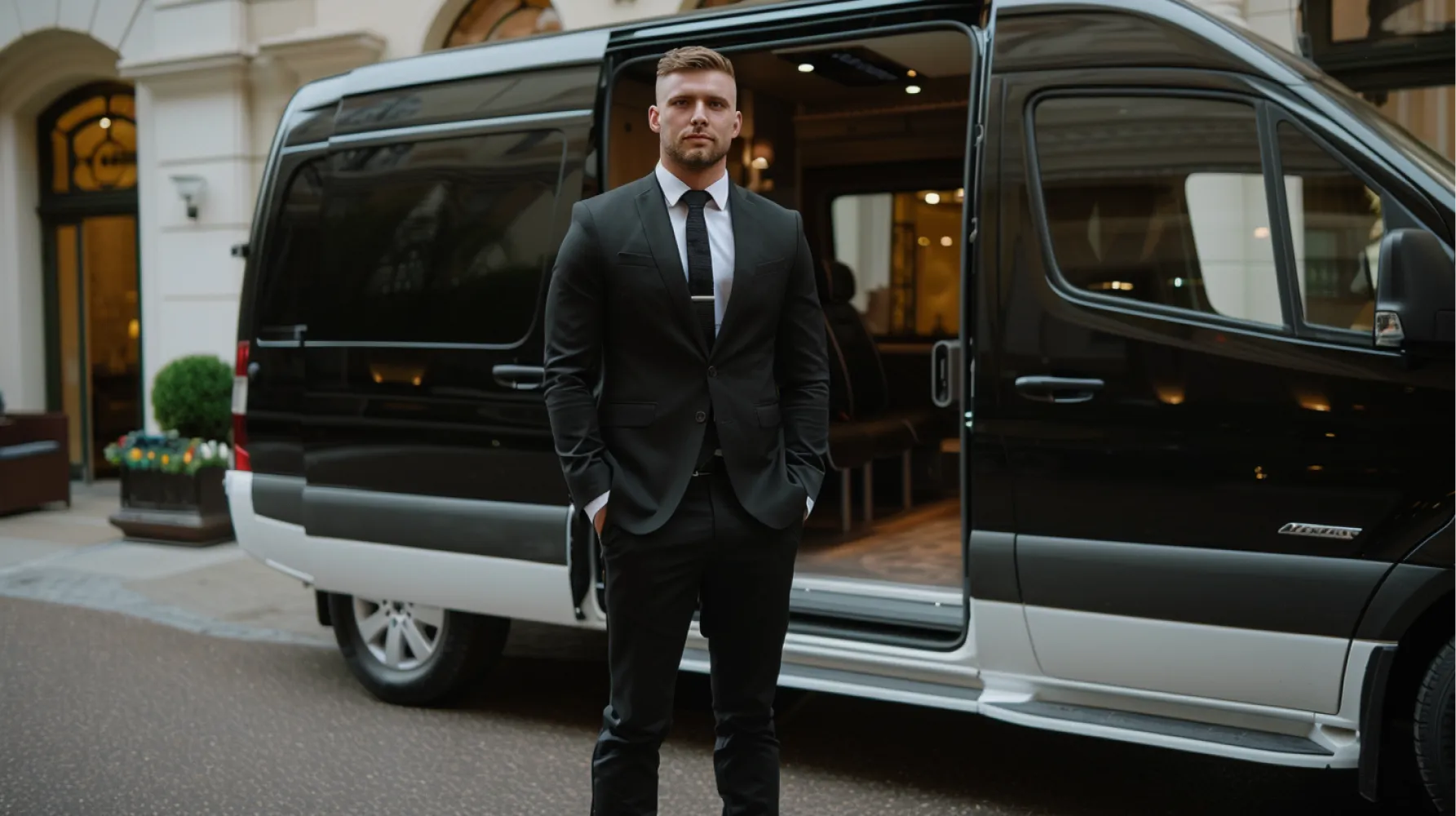
At drvn, we implement a stringent vetting and auditing process for our chauffeurs to ensure consistent, exceptional service. Our chauffeurs take pride in delivering a superior travel experience to every client.
What’s the biggest mistake planners make when scaling mobility?
The biggest mistake planners make is treating transportation as a last-minute task instead of integrating it into the event plan from the start. When mobility isn't part of the early strategy, it leads to poor visibility, rushed decisions, and preventable failures that ripple across the entire experience.
How does tech reduce costs in large-scale event transport?
Technology cuts costs by eliminating inefficiencies like empty rides, overbooking, or delayed routing decisions. With real-time data, you can optimize schedules, reduce deadhead mileage, and prevent last-minute fixes that inflate budgets.
What tools or platforms help with scalable mobility?
Look for reservation systems designed for large events, not one-off bookings. Platforms like drvn’s offer live manifests, GPS tracking, automated updates, and role-based permissions. These tools help you adjust in real time and keep operations smooth as guest volume grows.
How do I coordinate transport for a large corporate or sport event?
Coordinate transport for a large corporate or sport event by treating it like its own mini-program, not a last-minute task. Start by mapping all movements (airports, hotels, venues, off-sites, team buses, VIP routes) and grouping travelers by time window and origin/destination. Use a centralized platform like drvn to build manifests, assign vehicle types and capacities, define pickup zones and staging plans, and manage real-time changes in one place instead of across multiple vendors and threads. Throughout, rely on independently licensed and insured carrier partners to deliver the actual transportation while your team keeps control, visibility, and communication through the platform.
What does it mean to scale event transportation?
Scaling event transportation means handling more guests, routes, and venues without losing control of timing or communication. Instead of just adding more vehicles, planners use systems, like drvn’s platform, to centralize manifests, routes, and updates, giving real-time visibility into movements while independently licensed and insured carrier partners deliver the actual transportation.
How does real-time tracking improve event logistics?
Real-time tracking provides planners with instant visibility into vehicle status and location. This allows faster decision-making, proactive updates, and immediate responses to schedule changes, minimizing disruption and maintaining on-time execution across the event.
How is drvn unique compared to traditional providers?
drvn is different because it isn’t a transportation provider at all, it’s a technology-powered reservation and coordination platform. drvn doesn’t own vehicles or employ chauffeurs; instead, it centralizes booking, manifests, tracking, and communication while independently licensed and insured carrier partners deliver the actual trips. This gives travel managers and event planners one place to control and see their ground programs across cities and suppliers, without having to manage a fleet.
Can drvn handle last-minute itinerary changes?
Yes. drvn’s platform supports real-time edits to routes, manifests, and passenger assignments. Coordinators can adjust itineraries instantly, while attendees receive live notifications and updated instructions.
How does drvn’s technology integrate with event management platforms?
drvn’s platform integrates with event management systems through its proprietary reservation and manifest tools. It enables real-time synchronization of schedules, guest lists, and status updates, creating a single source of truth between mobility coordination and the wider event operation.
What is event mobility coordination?
Event mobility coordination is the process of planning and managing how attendees, speakers, and VIPs move between airports, hotels, venues, and off-sites as part of an event. Instead of booking one-off rides, planners use a platform like drvn to centralize manifests, routes, shuttles, and timing, then work with independently licensed and insured carrier partners to deliver the actual transportation so the agenda runs smoothly and attendees know exactly where to go and when.
Is defensive driving applicable to commercial drivers?
Yes, defensive driving is crucial for commercial drivers who face longer hours on the road and increased exposure to traffic risks. It helps them handle larger vehicles, improve reaction time, reduce accidents, and lower insurance costs, all while ensuring cargo and passenger safety.
Is defensive driving only for new drivers or chauffeurs?
No, even experienced drivers benefit from defensive driving. It helps correct bad habits, improves reaction time, and keeps you updated on the latest driving laws and techniques.
What exactly is defensive driving?
Defensive driving is a way of driving that focuses on anticipating problems before they happen and reducing risk on the road. A defensive driver stays alert, leaves extra space, follows speed limits, adjusts for weather and traffic, watches for mistakes from other road users, and avoids distractions like phones. The goal isn’t just to follow the rules, but to actively prevent crashes and keep everyone safer.
What are the costs associated with obtaining a chauffeur endorsement?
The cost of obtaining a chauffeur license varies by state but typically ranges from $25 to $100 for the application and licensing fees. Additional expenses may include background checks ($10–$50), medical exams ($50–$150), written and road test fees ($20–$50), and defensive driving courses ($50–$200), if required. If a commercial driver’s license (CDL) or endorsements are needed, costs may be higher. Checking with your local DMV or licensing authority will provide the most accurate fee breakdown.
How long does the chauffeur licensing process take?
The chauffeur licensing process can take anywhere from a few days to several weeks, depending on state requirements and how quickly you complete the necessary steps. Factors that affect the timeline include background checks, medical exams, written and road tests, and application processing times. Some states offer same-day approval, while others may take several weeks to review documents and issue the license. Checking with your local DMV or licensing authority can provide a more accurate timeframe.
Can I use my personal vehicle as a chauffeur?
Most regions don’t allow someone to simply use a personal vehicle as a chauffeur car; the vehicle typically needs to meet commercial requirements, including proper licensing, permits, and commercial insurance, and is usually operated under a licensed carrier company. drvn works with independently licensed and insured carrier partners who are responsible for meeting all regulatory and insurance requirements for their chauffeurs and vehicles.
Do I need a commercial driver’s license (CDL) to be a chauffeur?
In most cases, a CDL is not required to be a chauffeur unless you are driving a vehicle designed to transport 16 or more passengers (including the driver) or operating a large commercial vehicle over 26,001 lbs. For standard luxury sedans, SUVs, and limousines, a chauffeur license or special endorsement is typically sufficient. However, requirements vary by state, so it’s important to check with your local DMV or transportation authority to ensure compliance.
What role does technology play in enhancing guest and traveler experiences?
Technology turns ground transportation from a series of disconnected rides into a predictable, low-friction experience. A platform like drvn lets planners and travelers see clear itineraries, real-time status, pickup details, and changes in one place, instead of chasing emails or texts from multiple vendors. Profiles, preferences, and notes can be captured once and reused across trips, while integrations with travel or event tools keep information consistent.
How can personalization improve guest satisfaction in hospitality?
Personalization improves guest satisfaction by making stays feel easier and more relevant to each person. When hotels, venues, or travel programs remember preferences, like room type, transport needs, arrival times, or communication style, and apply them automatically, guests spend less time repeating details and more time feeling taken care of. With the right platforms in place, these preferences can be saved once and reused across trips, creating a smoother, more consistent experience.
What is wellness tourism, and why is it gaining popularity?
Wellness tourism is travel focused on enhancing physical, mental, and emotional well-being through activities like spa treatments, yoga retreats, meditation programs, and holistic healing experiences. It is gaining popularity as travelers increasingly prioritize health-conscious lifestyles, stress relief, and self-care during their trips. Hotels and resorts are responding by offering personalized wellness programs, organic dining options, and nature-based activities that promote relaxation and rejuvenation. As people seek more meaningful and restorative travel experiences, wellness tourism continues to grow as a major industry trend.
How are hotels implementing sustainability practices?
Hotels are implementing sustainability practices by adopting energy-efficient systems, waste reduction initiatives, and eco-friendly sourcing. Many properties now use LED lighting, smart thermostats, and renewable energy sources like solar power to cut emissions. Waste reduction efforts include composting food waste, eliminating single-use plastics, and enhancing recycling programs. Additionally, hotels are sourcing locally grown organic ingredients, biodegradable toiletries, and sustainably made furnishings to minimize environmental impact. By integrating these practices, hotels are reducing their carbon footprint while appealing to eco-conscious travelers.
What are the key technological trends in the hospitality industry for 2025?
The key technological trends in the hospitality industry for 2025 include AI-powered personalization, contactless technology, smart room automation, and virtual/augmented reality (VR/AR) experiences. Hotels are leveraging AI chatbots for instant customer service, while mobile check-ins and digital room keys enhance convenience and security. Smart thermostats, voice-controlled assistants, and IoT-enabled devices are creating hyper-personalized stays, while VR and AR allow guests to explore destinations and hotel amenities before booking. These innovations are reshaping hospitality, offering seamless, tech-driven experiences that meet evolving guest expectations.
What technology can help streamline event transportation?
Event transportation runs more smoothly when planners use a centralized platform to coordinate all movements instead of juggling separate vendors and spreadsheets. Tools like drvn’s reservation platform let you manage group manifests, routes, time windows, and changes in one place; integrate with registration or event tools; provide attendees with clear pickup details; and give planners real-time visibility into status and exceptions, while transportation is delivered by independently licensed and insured carrier partners.
How do I handle transportation for VIP guests?
Handle VIP transportation by planning it as a dedicated, structured part of your program rather than as one-off rides. Start by confirming their schedules, preferences, and any security or privacy requirements; then assign appropriate vehicle types, backup options, and clear pickup/drop-off protocols. Use a centralized platform like drvn to coordinate routes, manifests, and real-time updates in one place, and work only with independently licensed and insured carrier partners, so VIPs get predictable, discreet movements while your team maintains control and visibility.